Kasutad veebilehitsejat, mida tootja enam ei uuenda. Palun vaheta veebilehitsejat või laadi turvaliseks internetikülastuseks ja meie veebilehe sisu õigesti nägemiseks alla uuem brauser:
 Merko Group
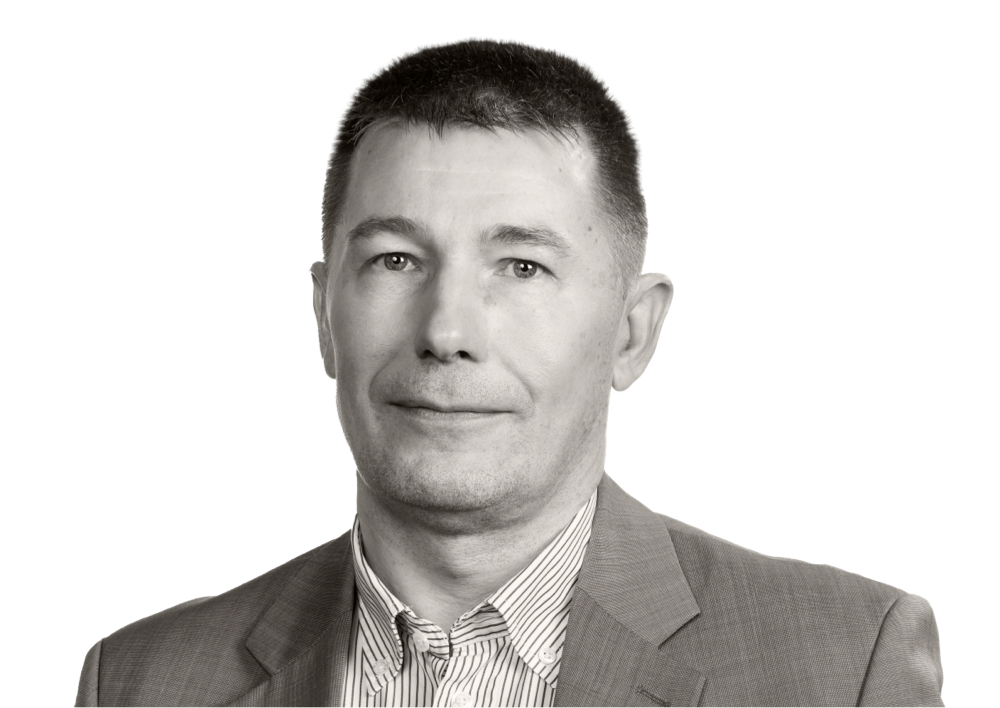
Head of Finance Urmas Somelar joined Merko in 2021 and has served as Member of the Management Board since June of this year. Besides being in charge of group’s finances, investor relations and compliance, Urmas is responsible for green transition topics – analysing how they affect our operating activity and what sorts of new risks need to be managed. “One thing is certain – risks keep on accruing, especially if we can’t or don’t want to keep up with the changes in the world around us,” says Urmas.
Urmas, let’s get to know you better. You’ve worked for Versobank and various units at Swedbank. For three years, you ran Riigi Kinnisvara (Estonian State Real Estate company), followed by real estate development in Ukraine. How would you sum up your career so far?
I have had an interesting life, which has offered diverse experience in different fields and positions in banking and real estate. There was a saying about a person like that from back in Soviet times – “a tractor driver with a broad profile”. I made my first acquaintance with banking when I was hired by the Bank of Estonia in 1993, and after some time, I transitioned into the commercial banking sector. In my 30 years in the workforce, I have for about 20 years held different positions in banking and 10 years (including my time in Merko) in real estate development and management positions. I haven’t worked at Estonian Swedbank that much, really – it was for its predecessor, Hansabank. At Swedbank, I worked in Kyiv, Riga and Moscow. I also was in Kyiv frequently when I was the chairman of the supervisory board of Arricano Real Estate, which was listed on the London stock exchange; it developed and managed shopping malls. My most recent experience with banks well-known in Estonia was consultation service type of cooperation with Luminor in the first year of the pandemic.
Half-jokingly, you could say I am a restless soul and if life gets too calm or regular, I quickly find a new gorgeous challenge to wrestle with. I acknowledge that I also need to sit still and do routine things, but routines and details can’t be allowed to overtake life. We only live once and you have to live it to the max. Looking back at my 30 years, I have no regrets, even though not everything I have taken on has been a 100% success.
How much did you follow what Merko was doing before you joined the company?
To be honest, not much. I have caught a few things from the corner of my eye, especially since people I know and former co-workers have been at Merko for long years, but not as an investor. Since Merko keeps a low profile in its public communication, Merko news don’t stand out in today’s information-filled environment and instead they are passed on by people I know.
What is the state of our group’s financial health?
Its excellent capitalization and liquidity indicators set it apart from the sector’s average. Operations have been smart with foresight, without unnecessary risk-taking and having nicely kept their eggs in different baskets, as we say. I like that we target profitable activity, not volumes. I don’t want to poke fun at start-ups, but I consider their habit of growing volumes at a loss to be unsustainable, especially in markets and sectors with low entry barriers.
You say the world is changing and we have to keep up with the changes. What changes do you have in mind?
Global changes can be seen by everyone – not just the war in Ukraine and sanctions against Russia but increasing pressure for rapidly implementing the green transition, countries increasingly cash-hungry to cover the costs of war, Green Deal and their power apparatus, the increasing number of restrictions and regulations that a company must contend with. Staying on top in stiff competition requires constant adaptation to our surroundings; we have to stay a step ahead, always agile, always adapting.
Already now, most risks have been piled onto the construction general contractors’ shoulders and as a real estate developer we have our share of them, too. What sorts of new risks need to be managed?
 We are coping well with construction, development and market risks, but changes in legislation are resulting in additional compliance risks. There is a risk that someone will find that our operations are not in line with the requirements in force. Or worse, even our past activity could be re-evaluated in light of new standards – something that was OK previously gets re-interpreted as a violation and this gives raise to the risk of fines.
Are construction and development risks the same or is there a distinction?
Climate legislation means new legal acts are expected to be implemented, which clearly imposes different obligations on construction and development activity.
Due to green transition goals, developers have increasing responsibilities to consumers, who even by today’s legal norms are not required to be reasonable or informed. Developers will be required to disclose the life-cycle environmental footprint of a building and if it isn’t done right, they could be fined a percentage of their turnover.
By 2026, the construction and real estate sector will have the obligation of buying emissions allowances to cover carbon footprint, the way it is currently done in the energy sector. Although the details of how the mechanism will be established are not known yet, it is very likely that it will be imposed on Merko’s real estate development companies before construction services companies.
For example, we’ve seen a problem where a developer has sold a home to a consumer with a design-based energy performance certificate, but later on, the consumer feels that they have been cheated, although the difference is actually between the model and actual usage, and nothing to do with the thermal resistance of walls or doors and windows.
You’re also in charge of investor relations – do our shareholders mainly look at the bottom line or are there also some who appreciate what we’re doing on green topics?
In that sense, there isn’t really a valid comparison between Merko and companies operating on global markets. Global corporations listed on stock exchanges usually have a pretty fragmented shareholder structure and there is a serious push and pull between those shareholders as to whose ideals and views win the day. Such corporations include both kinds of active investors. Merko has a small circle of large shareholders whose views and ideas have grown closer to one another over the years, and they are relatively immune to current fads. During my time there’s been only one smaller investor interested in green deal era currents. Judging by that, I would say our shareholders are mainly looking at the bottom line.
To this point, revenue and profit have often been the measure of the company’s success. Is this yardstick changing in light of the new regulations and how?
I don’t see a direct change in the yardstick happening. Revenue and profit have stood the test of time as indicators and will certainly continue to dominate going forward. The new regulations have already resulted in other dimensions becoming more prominent and this will continue – dimensions like measuring how companies stack up in environmental sustainability, social responsibility and diversity. As the start-up boom has shown, there are plenty of investors in the world who prefer diverse and environmentally sustainable companies that make a loss and who avoid profitable investments in “polluting” sectors. That makes the world a very diverse place but also allows investors to make more informed choices and, depending on their preference, to put their money to earn new money or fulfil some other goal. To this point, we saw the latter objectives as charity, the domain of non-profits and foundations, but now the approach is also spreading to companies.
Merks, the group’s Latvian construction company, has been the target of proceedings of the Latvian competition authority, which is seeking to determine whether there have been violations of competition law involving construction companies in Latvia. Your comment?
Since the events in question were in 2015-2019, it’s increasingly hard to objectively assess it all. Officials viewed the matter as officials, not as people, and so it happened that a slip-up by an employee years ago led to proceedings with a massive fine for the company.
Based on that experience, we now consider compliance risks even more important than in the past, so we’ve emphasized the need to follow to ethics code without exceptions and have taken a very serious attitude to governmental enforcement and punitive mechanisms related to the green deal. We’re closely following the debate on whether administrative proceedings should be used to punish companies, since in administrative proceedings we have to prove our innocence, and the officials don’t have to prove our guilt. The Latvian proceedings in question to this point have shown that proving to be not guilty is not the easiest matter, since officials simply don’t consider the explanations given by companies, the logic that is common in business is alien to them, attempts to use legal arguments to prove error on the part of officials takes years of court hearings, which isn’t pleasant nor does it come cheap…
Unlike in Estonia, potential violations of competition rules are handled in Latvia under administrative procedure, where the competition authority is both the investigator and issues the judgment. Yes, a company may appeal the decision to administrative court but compared to criminal matter, the burden of proof is reversed – the company has to prove that it was not guilty of a cartel agreement, rather than the court proving that it was guilty. In spite of the steep penalties ranging into the millions of euros, a penal law-calibre standard of proof of guilt “beyond a reasonable doubt” is not applied in administrative procedure.
Is the investigation of possible violations of competition law under administrative procedure a peculiarly Latvian feature?
Unfortunately not, it’s the same in Lithuania and the new Competition Act is looking to introduce administrative proceedings to the Estonian legal system as well. Such a step would abolish or significantly reduce protection of companies, they are looking to place the burden of proof on the company and apply practices that would mean the end of limited liability – in essence, they would punish the shareholder instead of the person who committed a violation.

The Latvian regional court hasn’t published its ruling yet, but what sort of impact might the decision have on our business?
We consider the Latvian competition authority’s positions regarding the operating activity of SIA Merks to be completely unfounded. When the judgement by the administrative regional court is announced, we will analyse the conclusions and decide on an appeal to the Latvian Supreme Court.
The administrative fine levied by the Competition Authority is not payable and there are no other possible implications under Latvian law until the court decision comes into force. The consequences arising from legislation include a prohibition on SIA Merks bidding on public procurements for three years after the decision comes into force and it opens the door to possible civil action from the allegedly damaged parties. The Latvian Competition Authority did not fault the companies accused of being in a cartel with SIA Merks in regard to price agreements, so we consider it unfounded to presume that damage was done in the absence of specific evidence proving otherwise.
Business ethics have always been and are very important to us and any violation of fair competition principles goes against our core principles and values. We have to follow ethical business practices ourselves and communicate them clearly to our own employees and partners.
Recent years have been very unusual and complicated, from the pandemic and Ukraine war to high inflation and interest rates. What lies ahead in the next few years?
If I knew for sure, I would be off turning that knowledge into money (laughs). Actually, we’re in discussions about various scenarios and attached probabilities. On the global scale, you’ve got a fairly dark scenario of a fragmented world economy looking more likely; a re-division of spheres of influence between the superpowers and growth in inequality in the course of the green deal. A conflict between the Western civilization that enshrines both moral values and hedonism and an eastern civilization that tends to prize power and strength is ramping up. That will not necessarily lead to untreatable problems in the Baltic states’ economy but economic pressure on us is growing and that will ultimately force us to choose whose values we can afford in the long term and what we have to give up.
Specifically for Merko Ehitus, there will be enough work in the years ahead, there will be bread on the table, but you could say that the amount of ham-and-cheese in the sandwich is going to vary depending on our ability to find lucrative orders from customers, while avoiding bigger problems. It’s harder to predict the future in real estate development. As I see it, the Baltic economies will undergo a tougher period in the absence of major EU support facilities for developing the real economy, and with prosperity growing slower there will be small number of additional new home buyers. A new home will be relatively expensive and if affordability of renovation solutions and support can be improved by slashing red tape, many may opt for renovate existing housing stock they have inherited from their parents or grandparents. Coming back to what I said right away, keep in mind this is not set in stone, it’s just the scenario that currently happens to be most likely. There is still hope that the economy will return to a growth trajectory and that growing affluence will help people buy new apartments as they move up in the world.
When do you see consumer confidence and purchasing power improving, and what do you forecast for the next year from an individual perspective?
Building on the last answer, tougher times are reflected by fewer individuals who are able to successfully grow their assets. There’s always someone doing well in any given time-period, it’s not possible that everyone will fare poorly. It’s just that there will be fewer success stories. We will just have to make an effort to ensure that Merko’s people are among the more successful bunch. And we do have what it takes. We just have to mould those advantages into an actual result. In the broader sense, recovery of consumer confidence will depend on the duration and extent of the increased taxes and other burdens that the state is going to use to fund national defence and the green deal. Each additional levy on society will undercut consumer confidence about the future, belief in stability and the desire to take on investments with a long payback period. The various changes in the taxes and other similar obligatory premiums and payments will continue until 2026 and it is unlikely that broad-based confidence will return to former levels before the changes have been introduced and the actual impact on consumers has become evident.
Read more:
If you’re interested in reading more about the subject see the corresponding section on the Merko Group website.
Ethical practices and business integrity are important to us. We expect our employees, customers and partners to follow ethical business practices in their daily work. Read more on group website.